Food is fellowship
Restoring The Lord's Supper ~ PART 1
"The ‘calculating’ hostage negotiator and the ‘mumsy’ Jewish lady both understood the same thing. Both of the above anecdotes are also summed up in principle by this saying: ‘It's hard to remain enemies when you've broken bread together.’"
‘Food is fellowship.’ That’s what we say in our house. I can’t imagine I am the only person to have coined such a phrase but that is what my wife and I say, and whilst it might sound like a flippant excuse for a good nosh-up – and there’s nothing wrong with that from time to time – what we are actually seeking to express in such a sentiment is our firm belief that sharing food and hospitality with people is a vital part of developing our spiritual relationships with them. Leaving aside spirituality and the Bible for the moment (but we shall surely come to these), I just want to note for now that in every age and place, irrespective of religion and culture, people share meals as a means of expressing love, friendship and getting more deeply acquainted.
My wife and I are English, but we don’t necessarily fit all of the stereotypes, and so we, with ease and frequency, invite people to our home for meals, which is not the common pattern for all natively English people. We host various people, including: friends, family and neighbours – not all Christians, but when we invite other Believers to dinner/lunch/cup of tea (yes we fit that particular stereotype!) we are always hoping to enjoy not only the food but also some deeper, spiritual fellowship in some measure. When we invite non-Christians we expect things to work a little differently. In any case, the sure thing is that the people with whom we share meals we know a whole lot more intimately than those we only interact with in other areas of life. So, ‘food is fellowship,’ and sharing meals and other hospitality leads to a more intimate knowledge of people and their lives. Just to be clear though, we don’t make invites out of a calculated principle of trying to force deeper relationships. We just like people (albeit not everyone!) and we like food!
Hostage negotiation
Yes, we will come to Scripture and deeper things shortly but I just want to start this article series by emphasising the human importance of sharing meals and just how deeply that process affects us. Here’s a favourite anecdote of mine... Once upon a time I was out doing my job, van deliveries at that time, and I was listening to the radio. The show host was interviewing an ex hostage negotiator. I thought, even if I never have to deploy any of the techniques myself at any time this might be interesting to listen to and pass a few miles. So, the question was posed... ‘You’ve just been called to the scene where gunmen are holding hostages, they’ve made phone contact with you the negotiator, what do you do?’ A part of the interviewee’s answer was the following... One of the first things we do is ask if they need food in there – both captors and captives are trapped inside and people will start getting hungry. If the offer of food is accepted we try to send in something that will require some kind of interaction between the captors and captives – assuming they are treating the captives with any dignity. The reason for this is, once there has been communication and interaction through the food sharing process it becomes significantly less likely that the captors will ultimately kill the hostages.
It was interesting listening, and my point is this... Before we go getting all deeply spiritual and biblical (but we will) we need to understand and realise just how powerful and affecting it is to simply eat with and share food with other human beings. I also heard a similar principle stated by a Jewish woman being interviewed once (the program was not of a religious nature). She said to the presenter, I and my family are always feeding people and insisting that they have something to eat – making them nice cakes and whatever they like. We are Jews she said, and so many times we have been persecuted, but it’s harder for people to kill you once you’ve baked them a cake!
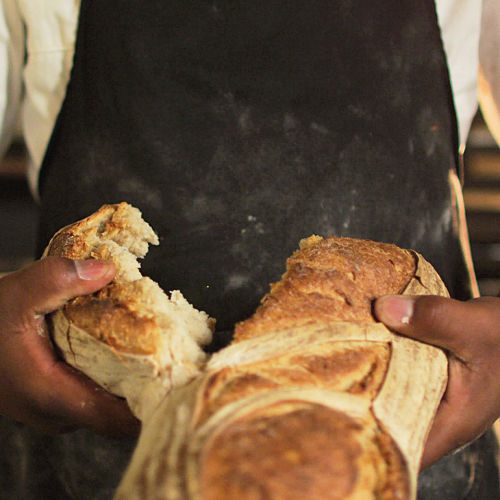
The ‘calculating’ hostage negotiator and the ‘mumsy’ Jewish lady both understood the same thing. Both of the above anecdotes are also summed up in principle by this saying: ‘It's hard to remain enemies when you've broken bread together.’ Whether you’re a Christian, a Muslim, an atheist, a rich man or a poor man, wherever you live in this world, the culture of shared meals produces a binding depth of intimacy and friendship, a God-ordained bond between fellow human beings.
Well, enough of the murder prevention strategies, it’s time we moved on further in examining the topic at hand. If you haven’t foreseen already where this article is leading to I’ll give you the heads up now... I wish to extract from the Scripture, not just from my own anecdotal evidences, the truth concerning the real Lord’s Supper. This was, in the early church - and was always intended to continue to be - a shared, communal meal.
Sponsored
You may also like:

Covenant making for dummies
Restoring The Lord's Supper ~ PART 2

From the old to the new
Restoring The Lord's Supper ~ PART 3

Terminology
Restoring The Lord's Supper ~ PART 4

Questions & conclusion
Restoring The Lord's Supper ~ PART 5